
Criminal Court Records in Noble County
A criminal court record is the full case file opened once the State of Oklahoma files charges against a named defendant. It is not a police report and not a jail booking sheet. It is the court's running account of the prosecution. The Noble County Court Clerk, Hillary Vorndran, holds these files at the courthouse in Perry. The clerk logs every filing, sets the official case number, and keeps the certified copies that count in court. The arrest side of a case is a closer look at the charges; the full case file and its outcome live here in the criminal record.
Criminal cases in Noble County are District Court matters. The District Court is Oklahoma's trial court of general jurisdiction, and it handles both felonies and misdemeanors filed under state law. Felony files carry the prefix CF, and misdemeanor files carry the prefix CM. A felony is the more serious class and can lead to prison time. A misdemeanor is the lesser class, usually punished by fines, costs, probation, or county jail. City ordinance and local traffic cases are not in this file; those run through Perry Municipal Court instead.
How to Search Noble County Criminal Court Records
The main path runs through two free statewide systems. The Oklahoma State Courts Network (OSCN) docket search lists Noble County District Court and works well when you know the case number. The On Demand Court Records (ODCR) portal also lists Noble County and is the better tool for searching by a person's name or by case type. Both let the public read full dockets at no charge. The official case-management record at the clerk's office controls if an online display ever differs from it.
- Open OSCN if you have a case number. Pick Noble County District Court from the court list, then enter the number.
- Switch to ODCR to search by defendant name. Enter the name as Last, First and select Noble as the court.
- Narrow the results by case type, such as Criminal Felony Proceedings or Criminal Misdemeanor Proceedings, and by filed date range.
- Open the case to read the docket, the charges, the hearing history, and the disposition.
- Call or visit the Court Clerk at 580-336-5187 for a certified copy or for anything that does not appear online.
For a sentenced person who has left the county, statewide custody and history tools fill the gap. The Oklahoma Department of Corrections offender lookup covers people serving state sentences, and the federal Bureau of Prisons locator covers federal inmates. Each is described further below.
Stages of a Noble County Criminal Case
A criminal case moves through set steps, and the record grows at each one. The charging document opens the file. From there the court schedules hearings, the parties file motions, and the case ends in a plea, a trial verdict, or a dismissal. Felony files usually add a preliminary hearing and a bind-over step that misdemeanors do not have. Every event lands on the docket with a date and a short code, so the docket reads as a timeline of the whole prosecution.
Case flow: Charges Filed › Arraignment › Pretrial / Motions › Plea or Trial › Disposition › Sentencing
| Stage | What Happens |
|---|---|
| Arraignment | The defendant hears the charges and enters a plea of guilty, not guilty, or no contest. Bond and counsel are addressed here. |
| Pretrial / Motions | Lawyers file motions, exchange evidence, and argue legal issues. Felonies may add a preliminary hearing to test probable cause. |
| Plea or Trial | The case resolves by a negotiated plea or proceeds to a judge or jury trial that ends in a verdict. |
| Sentencing | After a guilty plea or a guilty verdict, the judge imposes the sentence and sets fines, costs, and any restitution. |
What a Noble County Criminal Court Record Shows
A criminal case file holds a long list of fields. Some identify the case, some name the people involved, and some track money and outcomes. Docket rows carry a date, a code, a description, a count, a party, and an amount. The header carries the case number, the filing date, the case caption, the case type, the judge, and the status or closed date. The State of Oklahoma is the plaintiff in every state criminal case, and the named defendant sits on the other side.
| Field | What It Shows |
|---|---|
| Case Number | The prefix, year, and sequence, such as CF for a felony or CM for a misdemeanor, that name the file. |
| Defendant | The named person charged. The State of Oklahoma appears as the plaintiff. |
| Charges | The offense, its statute description, and the count number for each separate alleged crime. |
| Bond | The amount and type set for release, plus any surety listed. |
| Plea | The defendant's formal answer: guilty, not guilty, or no contest. |
| Disposition | The current or final outcome of each charge in the case. |
| Sentence | The punishment imposed, plus fines, fees, costs, and restitution. |
Note: Documents are sometimes marked available only at the Court Clerk's office, so an online docket can list a filing that you still must visit Perry to read in full.
Charges vs. Convictions
Being charged is not the same as being convicted. A charge is an accusation the prosecutor files. A conviction is a finding of guilt by plea or verdict. A Noble County criminal court record can show charges that were later dropped, dismissed, reduced, or that ended in an acquittal. Reading only the opening charge can mislead. Always check the disposition line to see how each count actually ended before treating someone as guilty.
| Charge | Conviction | |
|---|---|---|
| Stage | Accusation filed | Verdict or plea entered |
| Burden of Proof | Probable cause | Beyond a reasonable doubt |
| Can It Change | Yes, may be amended or dropped | Final unless appealed or vacated |
| Public Record | Yes | Yes |
Reading Noble County Criminal Dispositions
The disposition is the outcome line, and the sentence is the punishment that follows a conviction. Common dispositions include guilty, not guilty, dismissed, and a no contest plea, which is treated like a guilty plea for the case but is not an admission. A case can also end in a deferred sentence, where the judge holds off on a final judgment while the defendant meets conditions. A dismissal with prejudice generally cannot be refiled. A dismissal without prejudice can be refiled if the law allows.
The sentence portion lists the real-world result. It can name prison or jail time, probation, a suspended term, fines, court costs, fees, and restitution paid to a victim. A felony judgment and sentence document is the formal record of the result. Probation means supervision in the community under court conditions. Restitution is money ordered to repay a victim's loss. For the underlying arrest and the path the charges took, the Noble County court charge records give a closer look at how each count was filed.
Who Files Noble County Criminal Charges
Noble County sits in Oklahoma District Attorney District 8, which also serves Kay County. District Attorney Brian Hermanson leads the office, with Assistant District Attorneys Chris Landes and Tom Lane. The Noble County office is in Suite 6 of the courthouse at 300 Courthouse Drive in Perry, reachable at 580-336-4044. The district attorney decides whether to file or decline state charges after an arrest, so the charge that finally appears in the court file is the prosecutor's call, not the arresting agency's.
The District Attorneys Council profile for the district explains the office and its payment channels. You can review it on the Oklahoma District Attorneys Council District 8 page.
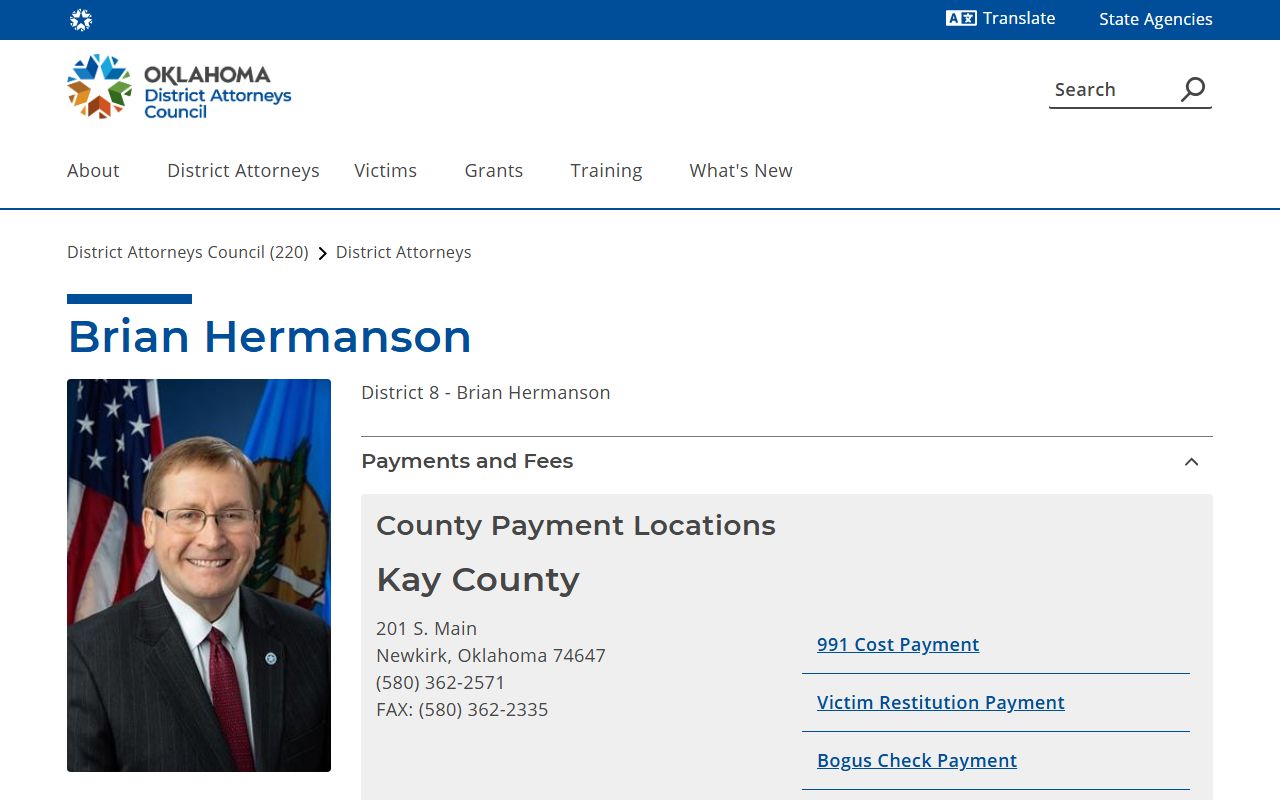
That same office handles four Noble County payment categories that show up in case files: 991 cost payments, victim restitution, bogus check payments, and district attorney supervision. A booking charge on a jail roster is not always the charge the prosecutor files, which is one more reason to read the court file rather than the arrest entry.
Defendants who cannot afford a lawyer may receive appointed counsel. The Oklahoma Indigent Defense System provides that representation in many counties, and its mission is to give indigent defendants legal help comparable to what paying clients can obtain. The agency describes its role on the Oklahoma Indigent Defense System homepage.
Appointment runs through the court and an indigency review, so a Noble County defendant should ask the District Court or the Court Clerk about the process rather than calling a civil legal-aid group.
After Sentencing: Where the Record Goes
A criminal court record does not end at the courthouse door. Once a defendant is sentenced to prison, custody shifts to the Oklahoma Department of Corrections, and the case file in Perry stays as the source for the charges and the judgment. To find a sentenced person, the state runs an online offender search that covers people in prison and on supervision.
The starting point for a state sentence is the Oklahoma DOC offender lookup.
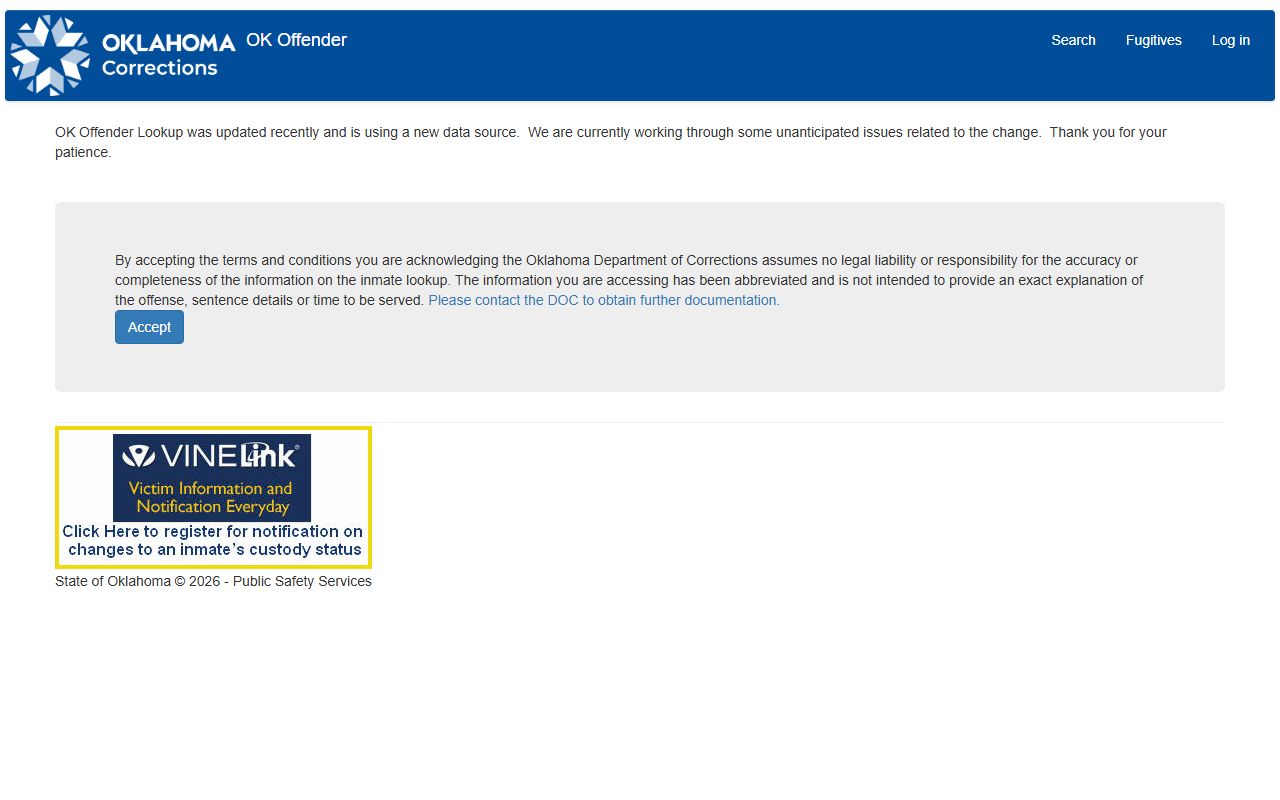
The DOC notes that its display is abbreviated and does not fully explain a sentence, so the court file remains the place to confirm the terms a judge actually imposed. Beyond the offender search, the corrections agency also runs a sex offender registry, a violent offender lookup, and an open-records request channel.
Those tools live on the broader Oklahoma Department of Corrections homepage.
State systems do not cover everyone. Some Noble County cases are prosecuted in federal court, and a federal sentence sends a person into the federal prison system instead of the state one. For those defendants, the federal locator is the right tool.
Federal inmates are found through the Federal Bureau of Prisons inmate locator.
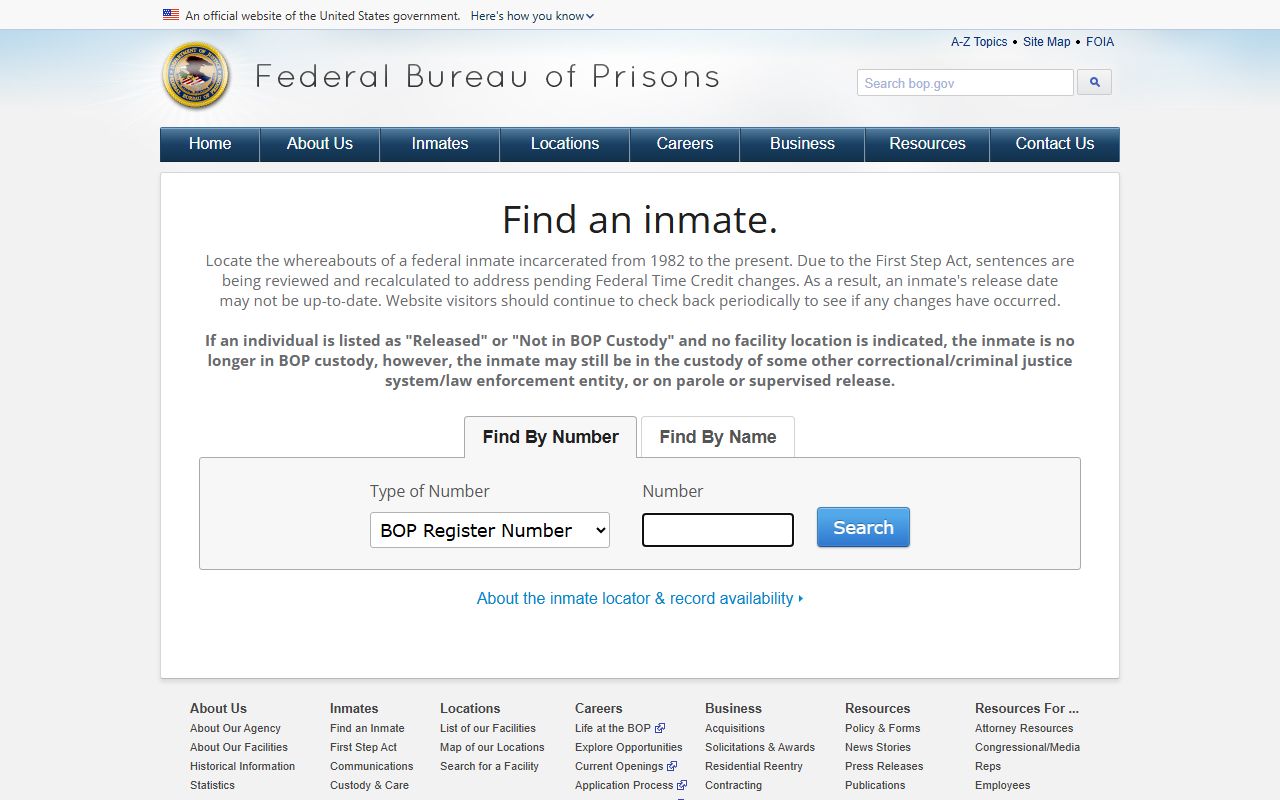
The federal locator works nationwide, so it is the place to check when a sentence came from a United States District Court rather than from Noble County District Court.
Sealed vs. Expunged Records
Some criminal records are hidden from public view by court order. Oklahoma uses two related ideas, and they are not identical. Sealing limits who can see a record. Expungement under 22 O.S. Section 18 goes further and treats qualifying records as if they should not appear in ordinary public searches. A sealed or expunged Noble County case may vanish from OSCN and ODCR or show only limited detail, but only after the court and the state repositories process the order.
| Sealed | Expunged | |
|---|---|---|
| Visibility | Hidden from public view | Treated as removed from public access |
| Law Enforcement | Limited access remains | Very limited access |
| Authority | Court order or statute | 22 O.S. Section 18 categories |
| Eligibility | Set by the order's terms | Statutory categories; OSBI cannot pre-approve |
A petitioner usually files in the District Court where the record exists, gives notice to the prosecutor and the Oklahoma State Bureau of Investigation, and asks the judge to seal the eligible records. The state explains the categories on the OSBI criminal history record expungement page. Completing probation or paying costs is not the same as an expungement, and a case stays visible until the order is entered and carried out.
Public Access to Noble County Criminal Records
Oklahoma treats court files as open to the public unless a statute or a court order makes them confidential. The Open Records Act gives people the right to inspect and copy public records during business hours. Online dockets are a convenience, not the certified file, so the clerk's case-management record always controls if the two disagree. For verified or certified copies, the Court Clerk in Perry is the office to contact.
Key Statutes:
Oklahoma Statutes Title 51 § 24A.1 et seq. - the Open Records Act opens public-body records to inspection and copying unless a law makes them confidential.
Oklahoma Court of Criminal Appeals Rule 2.6 - the OSCN online case search is a public convenience and does not replace the official case-management record.
Background Check Considerations
A casual docket search is not the same as a regulated background check. People use criminal court records for tenant screening, hiring, and personal safety, but a formal background screening for employment or housing must follow the federal Fair Credit Reporting Act. For a definitive criminal history, the official channels are the District Court file and the state criminal-history repository, not a quick online glance. For broader case lookups beyond criminal matters, the Noble County court records page covers the wider system.
Important: This site is not a consumer reporting agency under the FCRA, and its information may not be used for credit, employment, tenant, or insurance decisions.
Restricted Criminal Court Records in Noble County
Not every criminal-adjacent record is open. Juvenile cases are confidential under 10A O.S. Section 1-6-102, and ordinary juvenile files do not appear in public online search. Youthful offender and juvenile treatment matters are restricted as well. Mental-health proceedings carry confidentiality limits under 43A O.S. Section 1-109, which protects medical and psychotherapist communications. Adoption records are also confidential.
Sealed and expunged cases round out the list. An ongoing investigation, an unexecuted warrant, or a probable-cause filing may also be limited until it is served or filed. When a record does not show online, the next step is the Court Clerk, who can confirm whether a file exists, whether it is public, and how to get a certified copy.